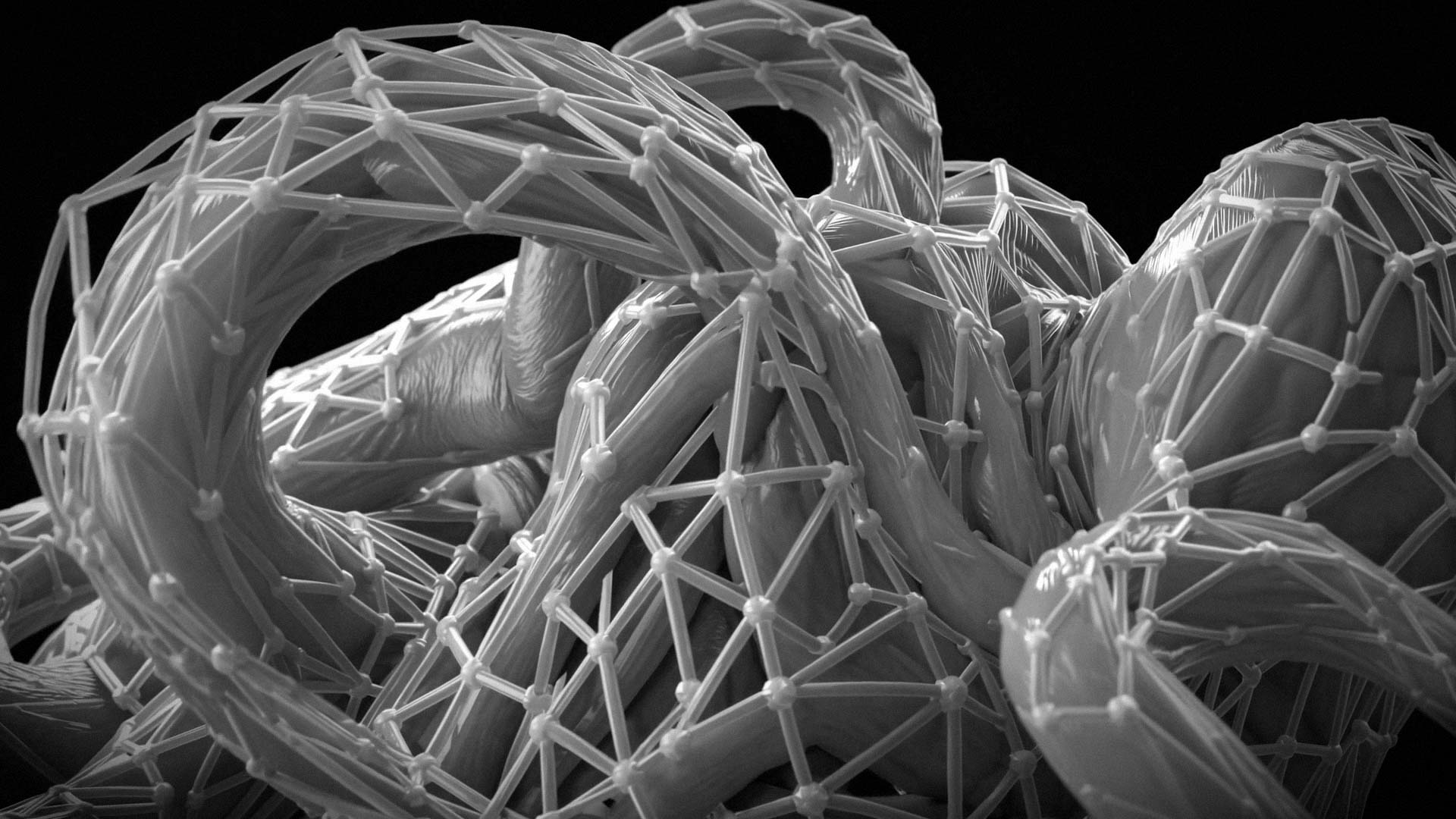
AI-generated video and sound exploring how cultural constructions of the "natural" and the "individual" are shaped by the computational
2025
TRT: 34:00
black and white HD video with stereo sound, 16:9
available for screen or projection presentation in full length or excerpt durations
Commission for Museum of the Moving Image supported by the National Endowment for the Arts
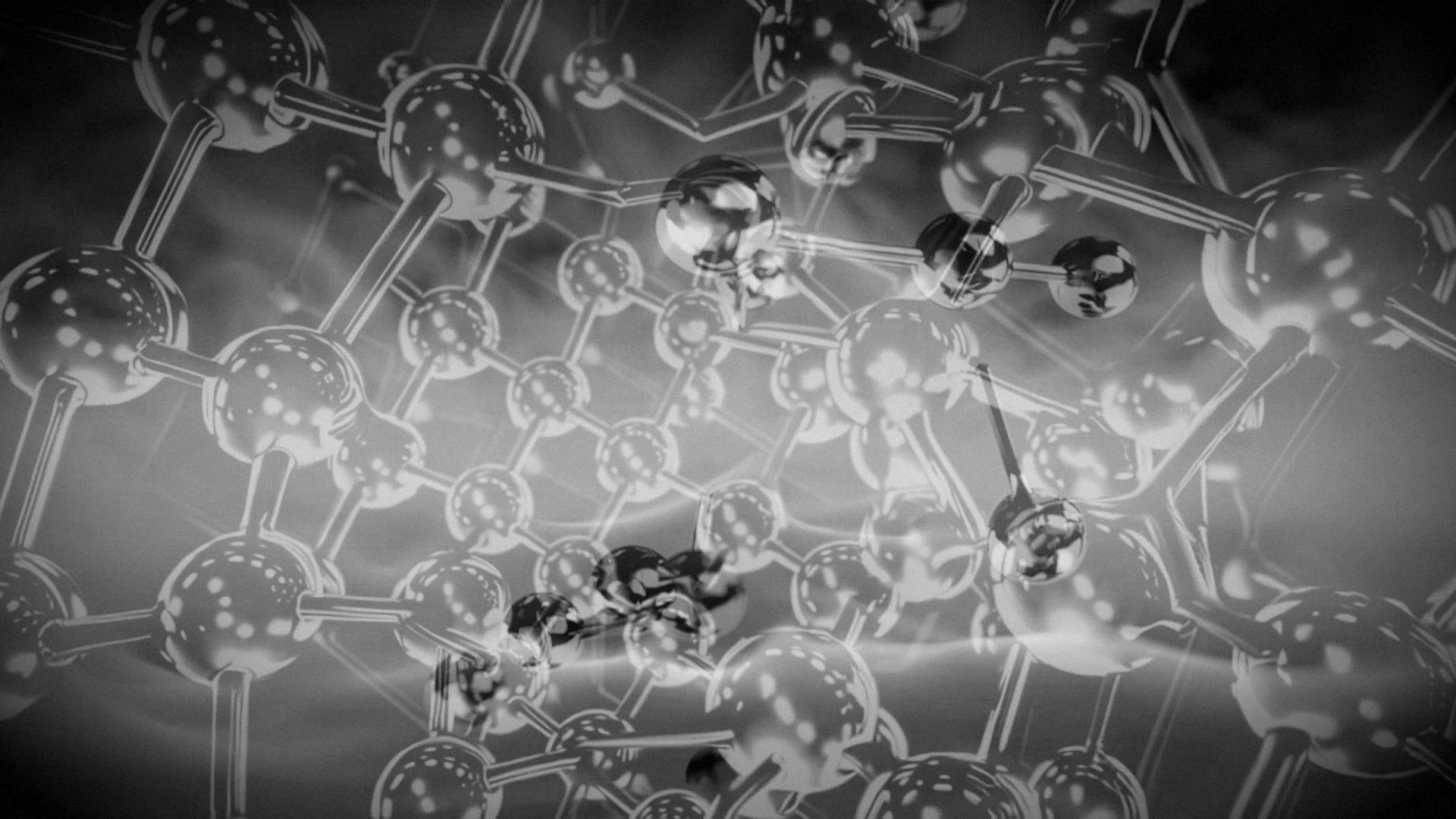
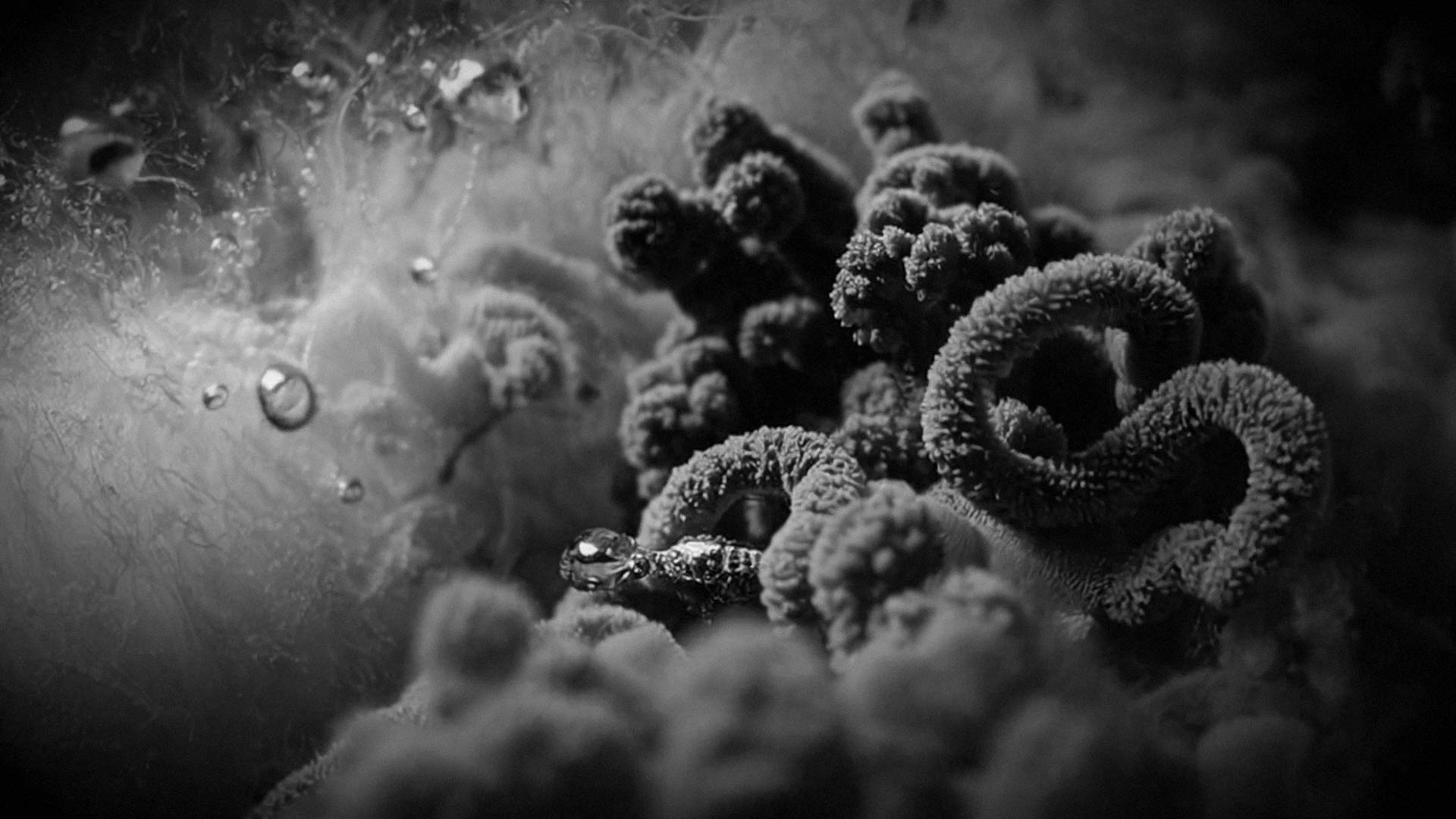
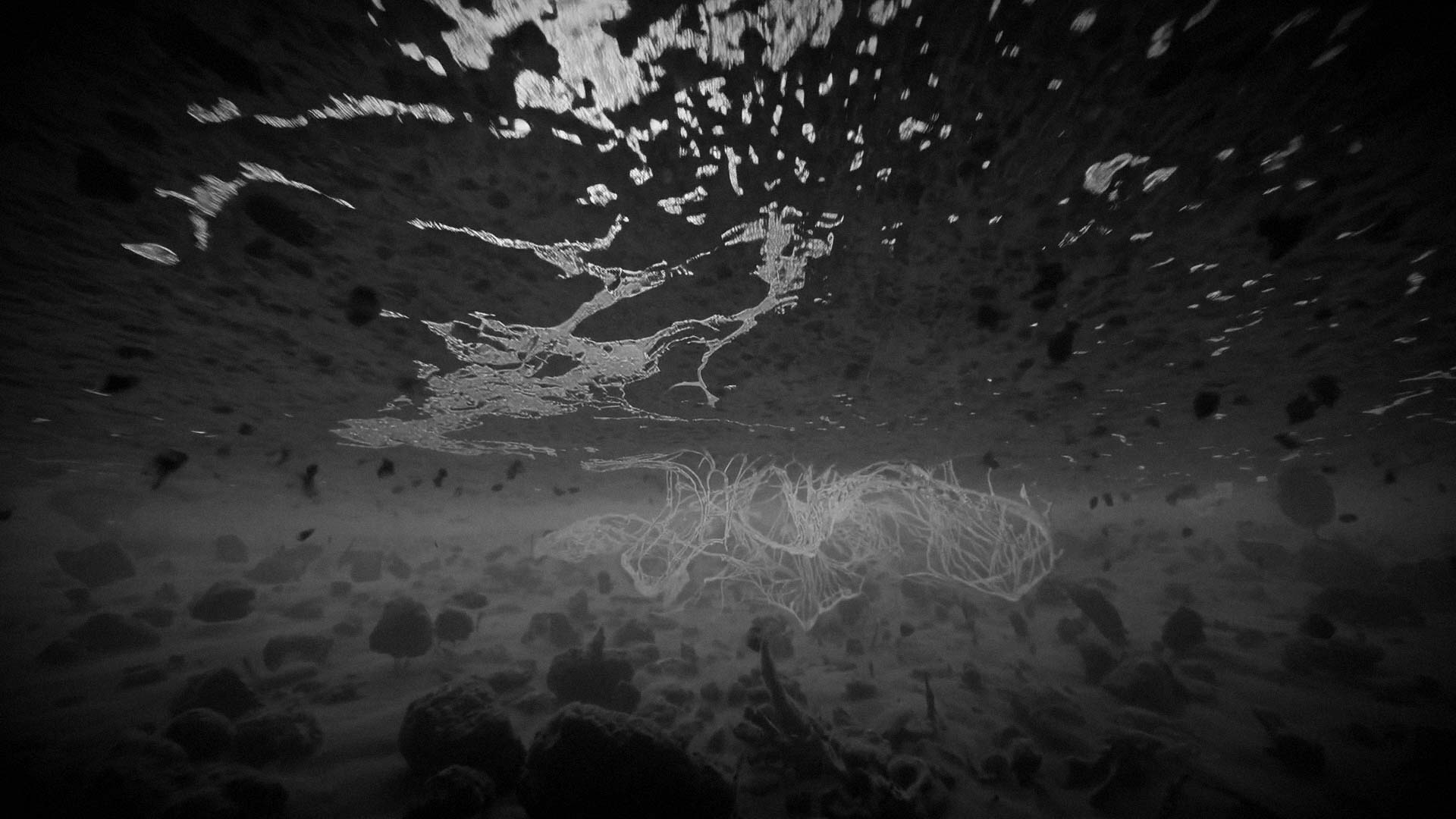
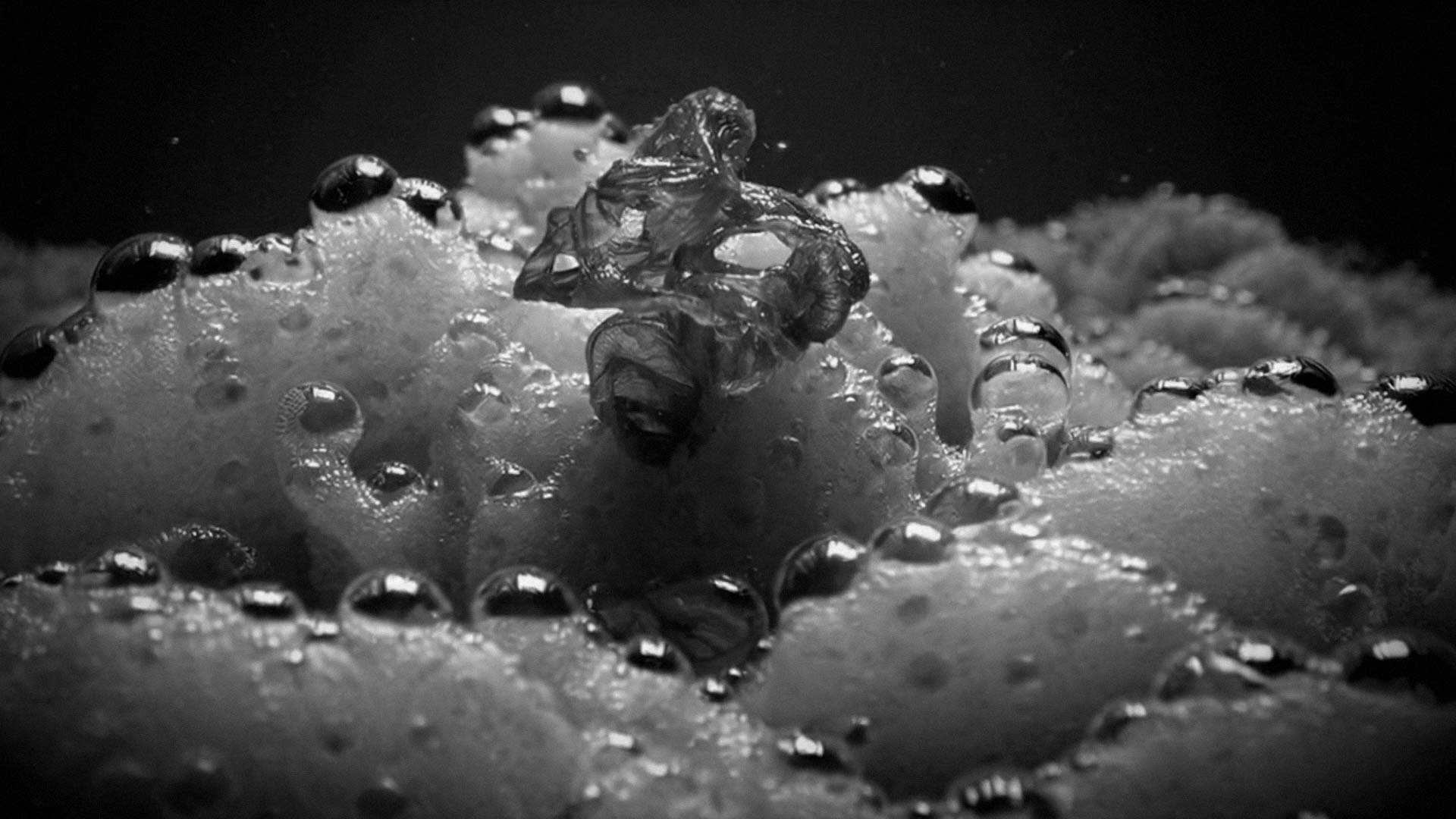
“Cryptic Lineages” presents a provocative exploration of emerging AI technologies through a post-photographic lens. The work is materially grounded in AI-generated video, biodata-driven sound and narration read using an AI clone of Splan’s voice. The narration is accompanied by an ambient soundscape created with a machine learning technology known as “reservoir computing” using simulated muscle movement data. Together, these elements weave a poetic narrative that merges science, fiction, and mysticism through speculations on a future generated by the detritus of the past. Using “physical reservoir computing” as a conceptual scaffold, “Cryptic Lineages” delves into the use of liquid, microbes, plants, and human bodies to perform machine learning tasks. Rather than relying solely on conventional silicon-based hardware like processors and circuit boards, reservoir computing uses the dynamics of natural systems. Shifting properties, such as the metabolic activity of bacteria or changes in the behavior of water under pressure, are treated as computational inputs. Natural responses to external stimuli are used as data streams for modeling, prediction, or classification. The work confronts the sociopolitical complexities of harnessing the intrinsic processes of dynamical systems to predict changes, forecast events, or detect anomalous behavior. Drawing upon real scientific experiments using water, bacteria, strawberry plants, and living tissue to process information, the work interrogates the increasingly porous boundaries between the computational and the organic. Themes of energy, waste, labor, and the instrumentalization of bodies offer poetic reflections on how our cultural constructions of the "natural" and the "individual" are shaped by the computational.
“Cryptic Lineages” presents a provocative exploration of emerging AI technologies through a post-photographic lens. The work is materially grounded in AI-generated video, biodata-driven sound and narration read using an AI clone of Splan’s voice. The narration is accompanied by an ambient soundscape created with a machine learning technology known as “reservoir computing” using simulated muscle movement data. Together, these elements weave a poetic narrative that merges science, fiction, and mysticism through speculations on a future generated by the detritus of the past. Using “physical reservoir computing” as a conceptual scaffold, “Cryptic Lineages” delves into the use of liquid, microbes, plants, and human bodies to perform machine learning tasks. Rather than relying solely on conventional silicon-based hardware like processors and circuit boards, reservoir computing uses the dynamics of natural systems. Shifting properties, such as the metabolic activity of bacteria or changes in the behavior of water under pressure, are treated as computational inputs. Natural responses to external stimuli are used as data streams for modeling, prediction, or classification. The work confronts the sociopolitical complexities of harnessing the intrinsic processes of dynamical systems to predict changes, forecast events, or detect anomalous behavior. Drawing upon real scientific experiments using water, bacteria, strawberry plants, and living tissue to process information, the work interrogates the increasingly porous boundaries between the computational and the organic. Themes of energy, waste, labor, and the instrumentalization of bodies offer poetic reflections on how our cultural constructions of the "natural" and the "individual" are shaped by the computational.
...Laura Splan is one of those artists whose practice seems to exist in permanent yet productive contradiction: a transdisciplinary artist that translates the invisible substrates of biological life into sensory, touchable, sometimes unsettling forms, from computer-embroidered lace viruses, weavings derived from biometric data, and immersive encounters with molecular simulations. The work insists that the complexity of the biological world can be felt and experienced, even before it is fully understood...