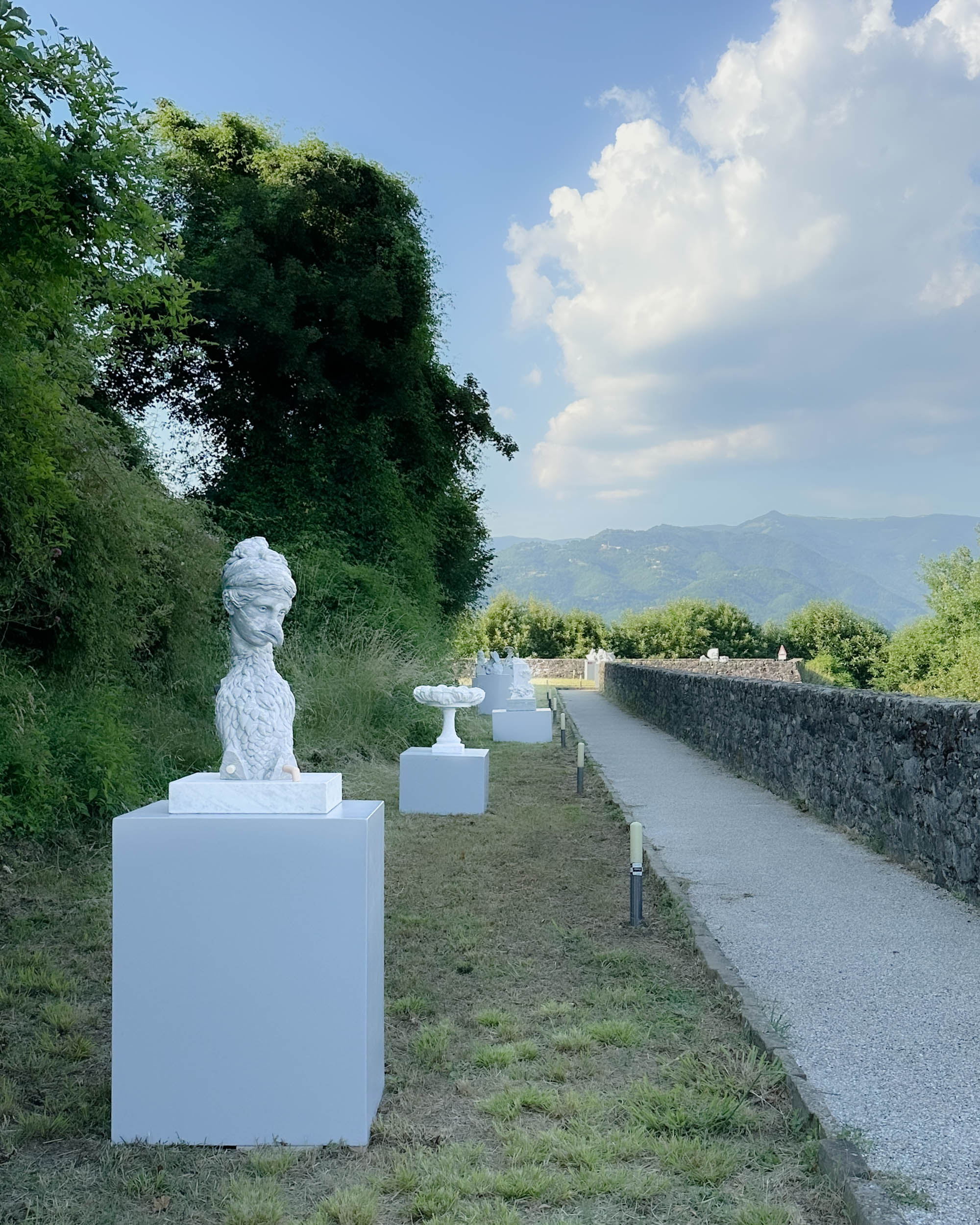
robotically carved marble sculptures by Laura Splan, Auriea Harvey, Phillip K. Smith III, Carla Gannis, Ashley Zelinskie...
"Per Forza di Levare"
Fortezza di Mont'Alfonso
Castelnuovo di Garfagnana (IT)
Curated by India Price for Digital Stone Project
June 26–August 30, 2026
Opening Reception: 6pm Friday, 26th June 2026
VIEW LOCATION ON GOOGLE MAPS
"Per Forza di Levare" features new robotically carved and hand-finished sculptures by artists Caroline Anderson, Helena Lukásová, Casper Braat, Lei Maslian, Jim Conboy, Mia Mulvey, Claudia Dietz, Mary Neubauer, Travis Donovan, Rob Postle, Darlene Farris-LaBar, John Rainey, Carla Gannis, Carissa Samaniego, Lucas Goossens, Sumit Sarkar, Auriea Harvey, Gabi Schwab-Trapp, Jon Isherwood, Phillip K. Smith III, Christina Karababa, Laura Splan, Sean Khales Ballo Kizy, Ashley Zelinskie.
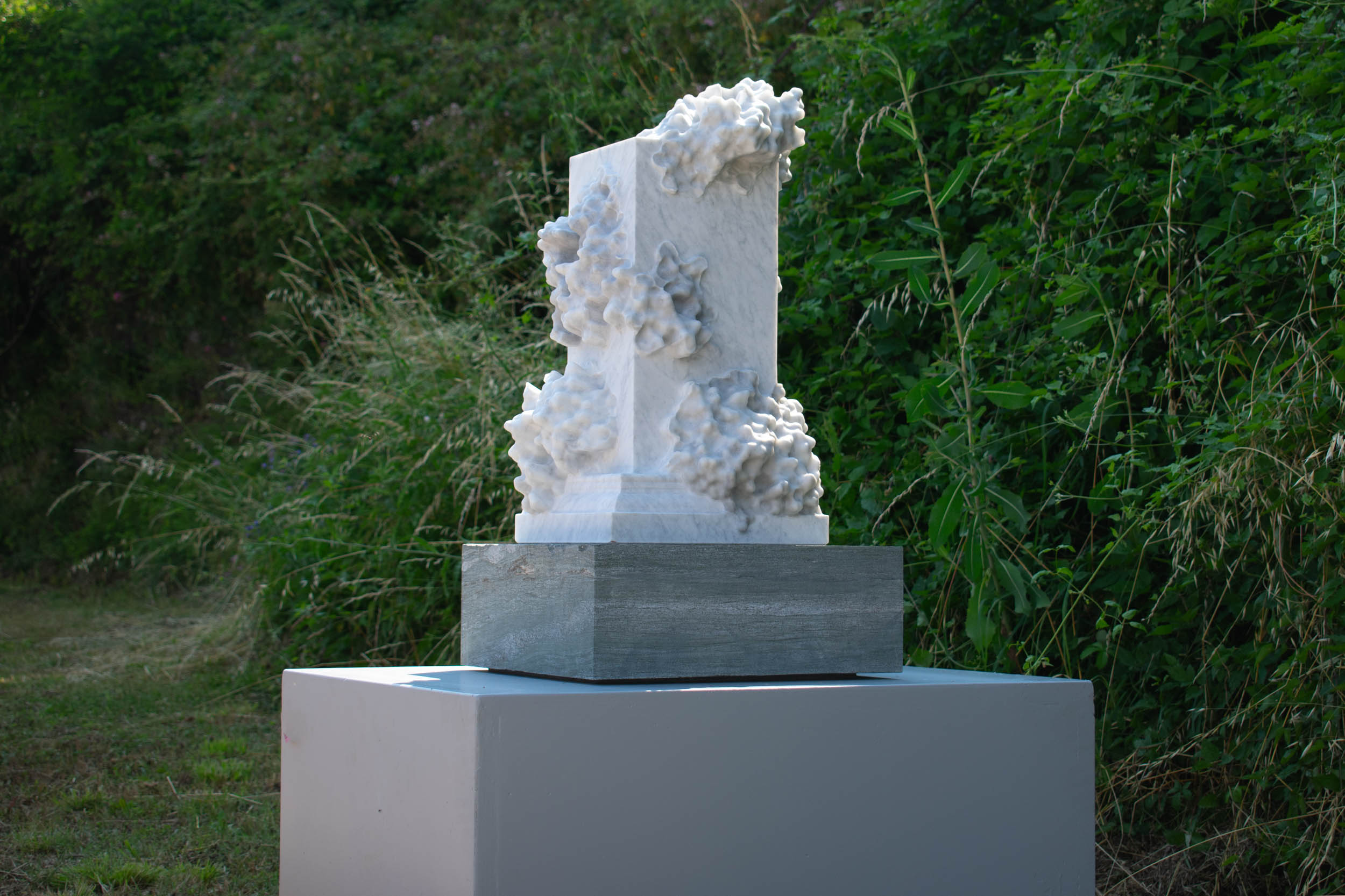
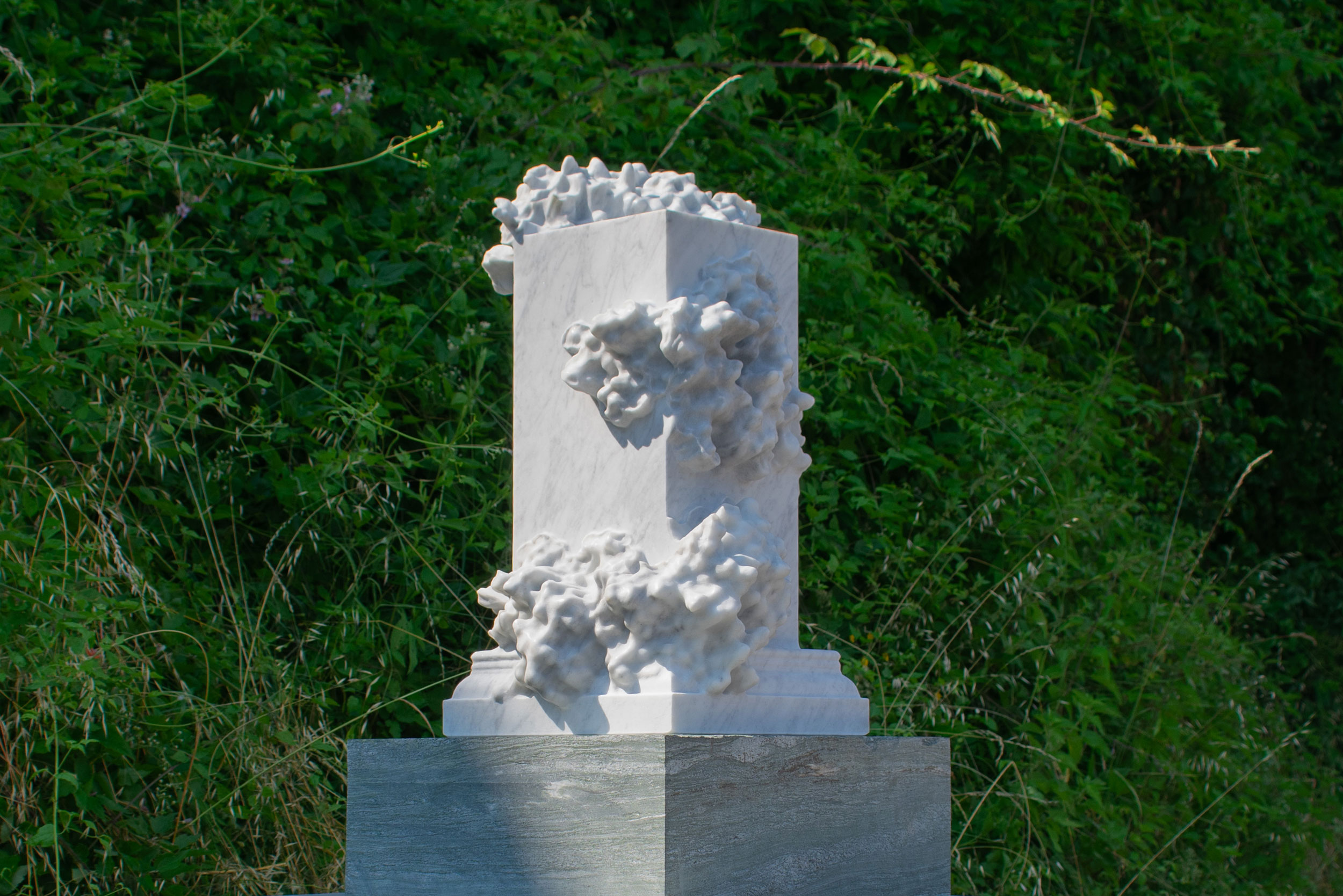
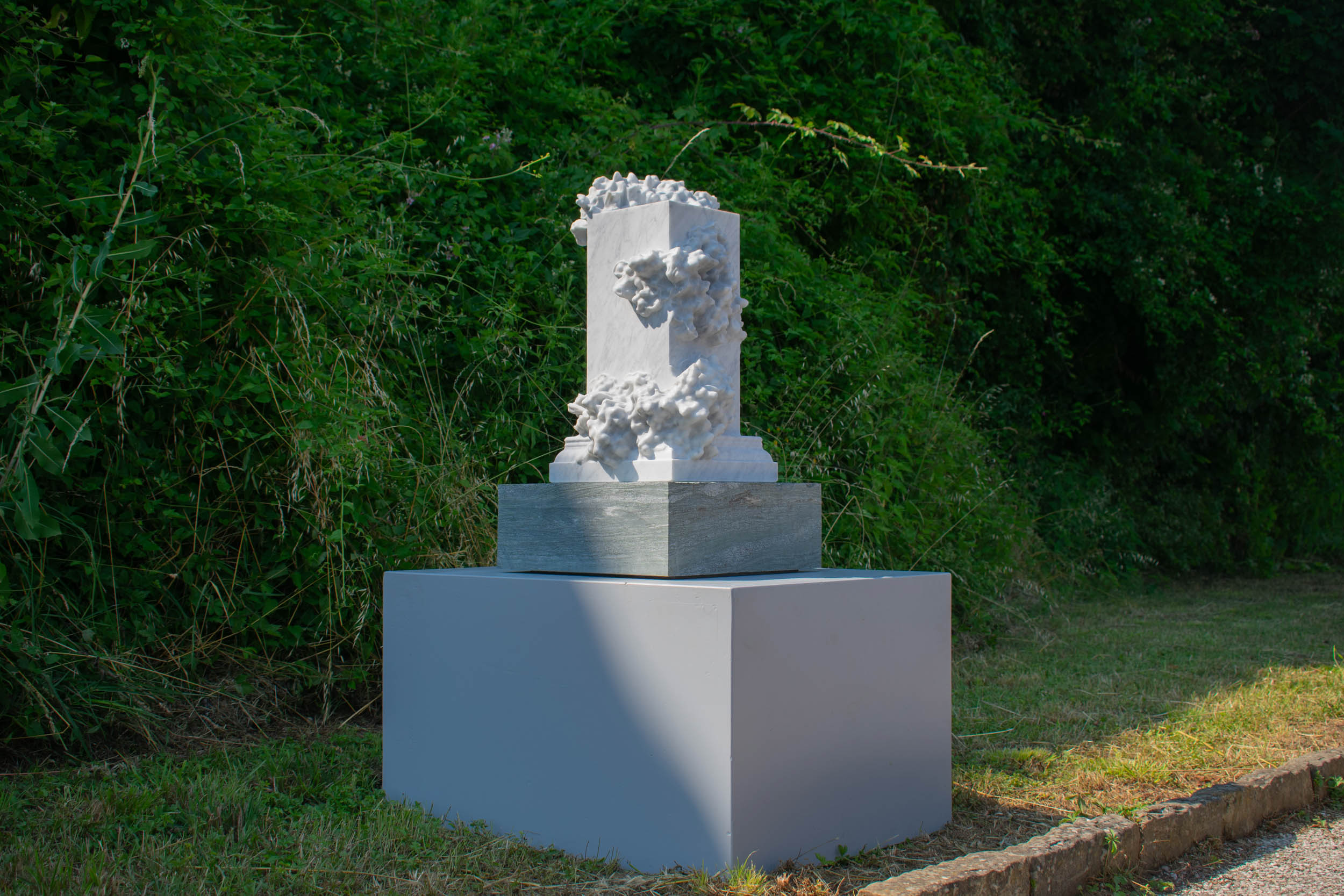
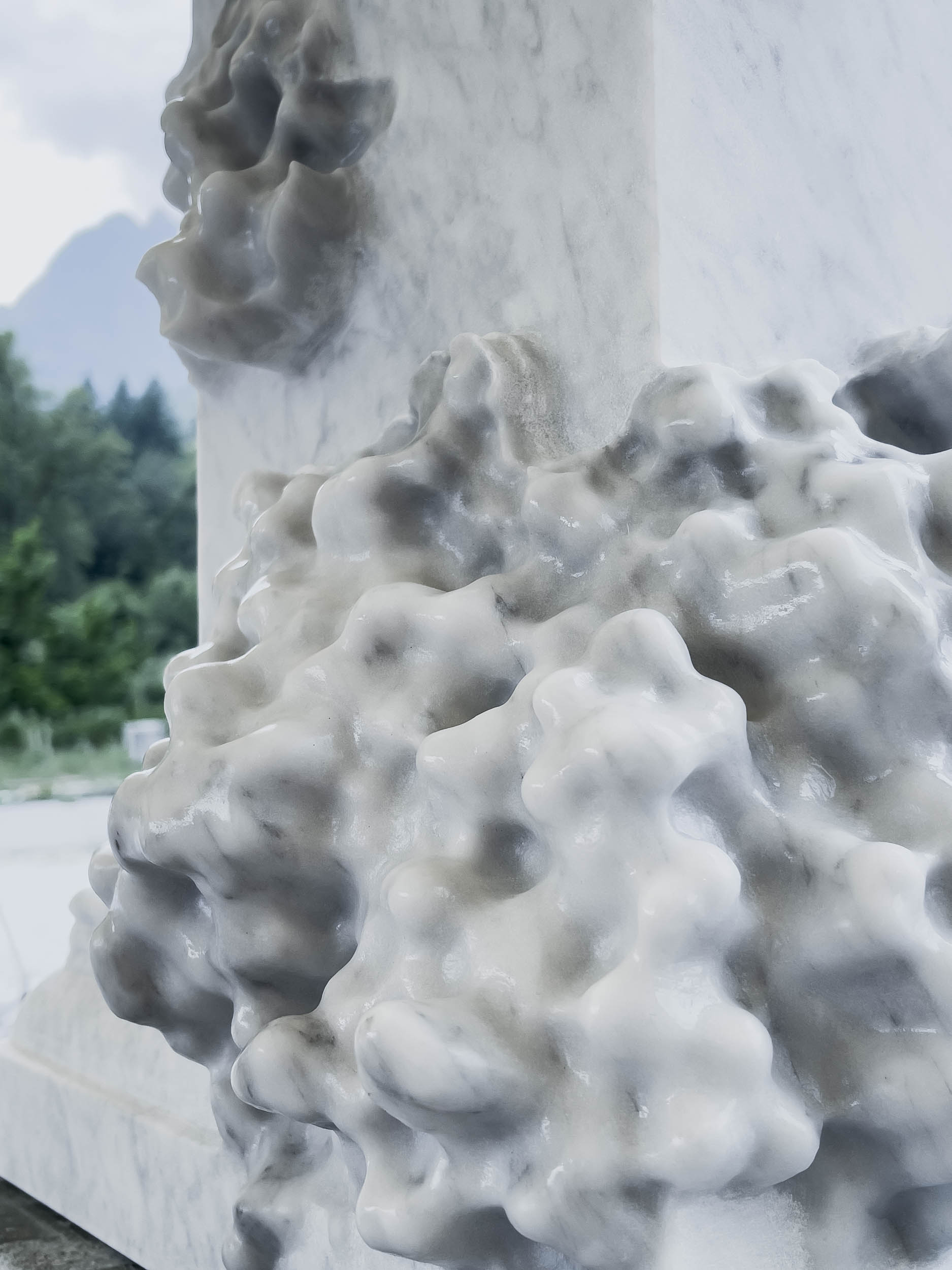
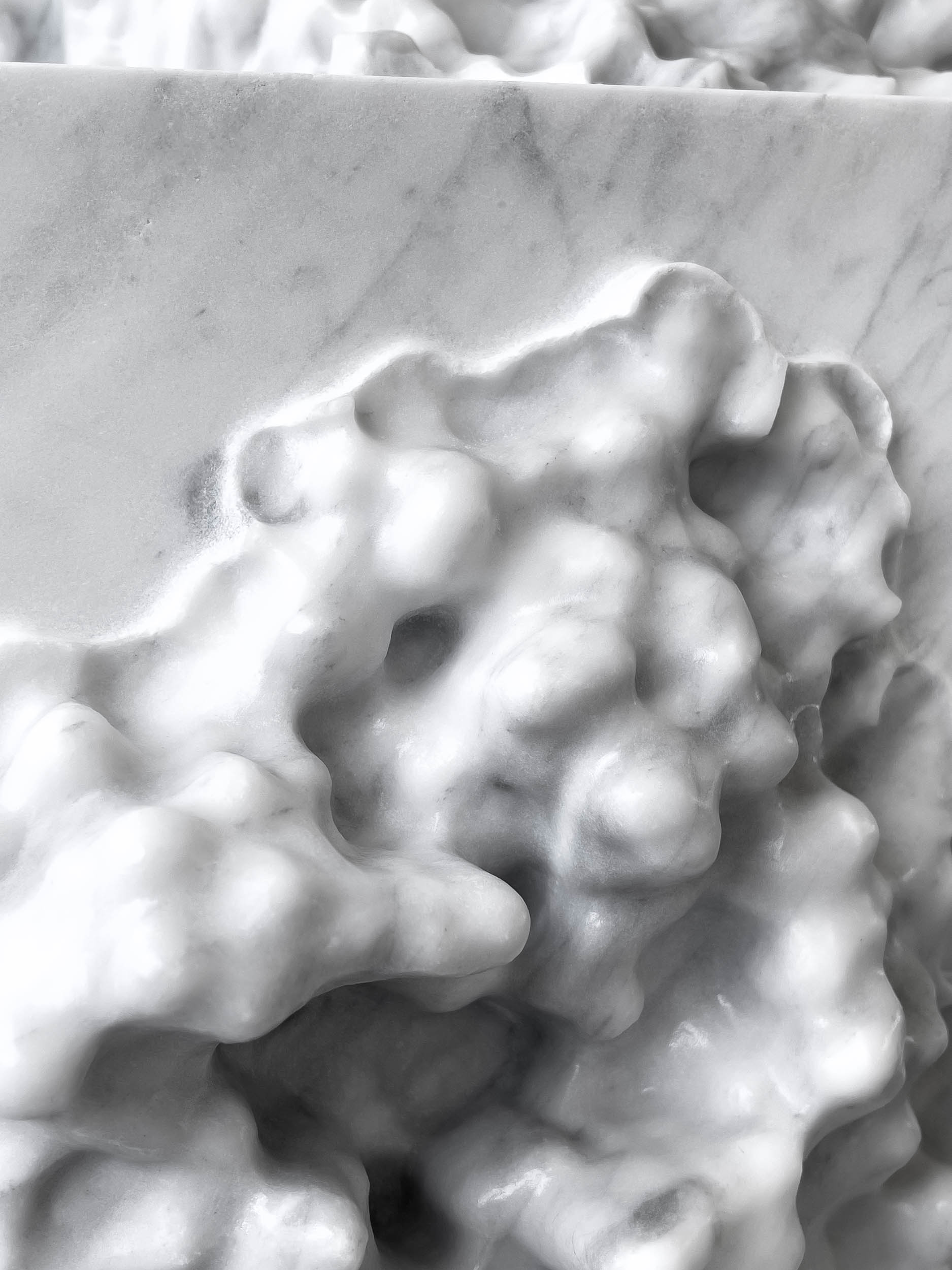
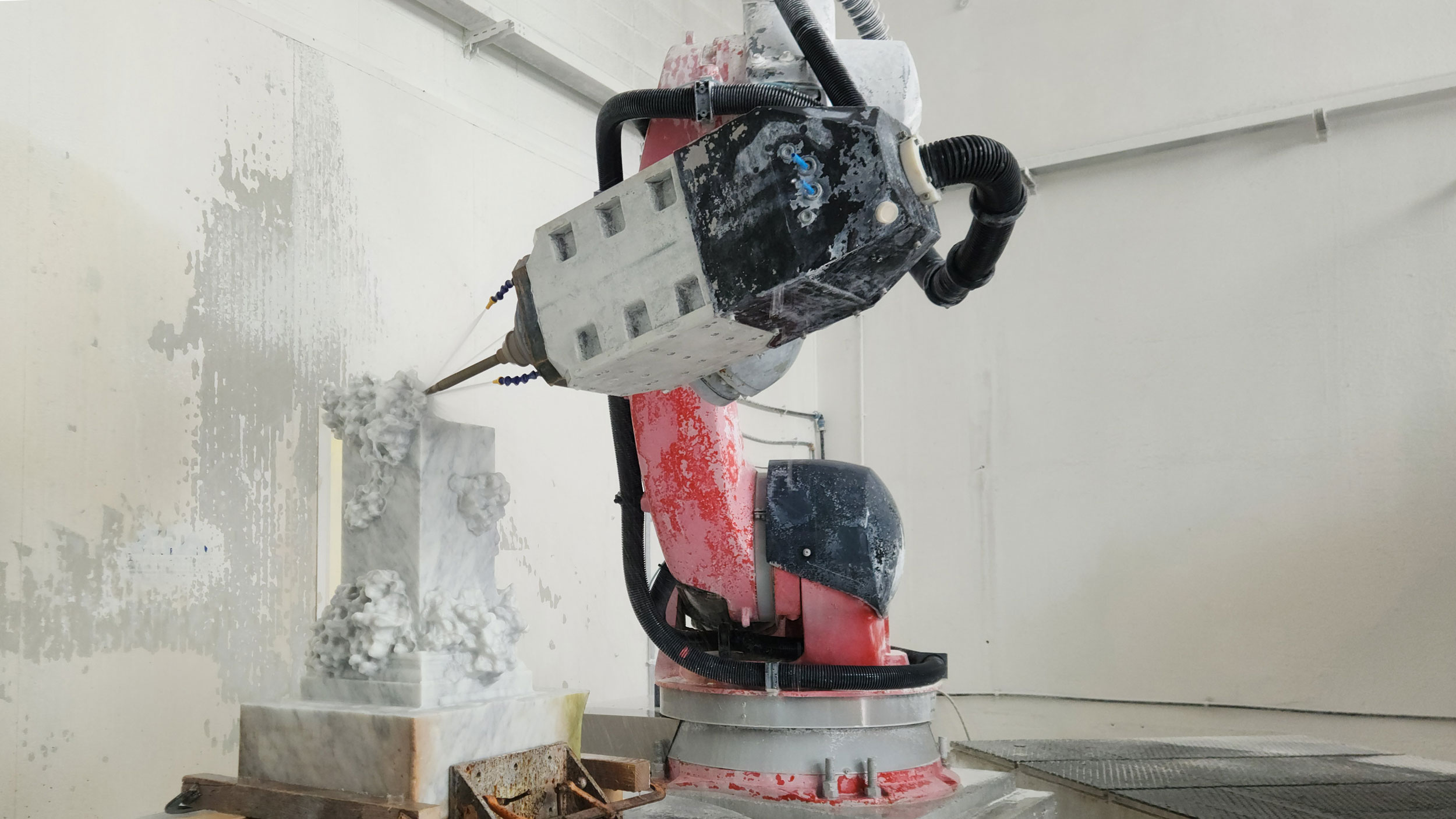
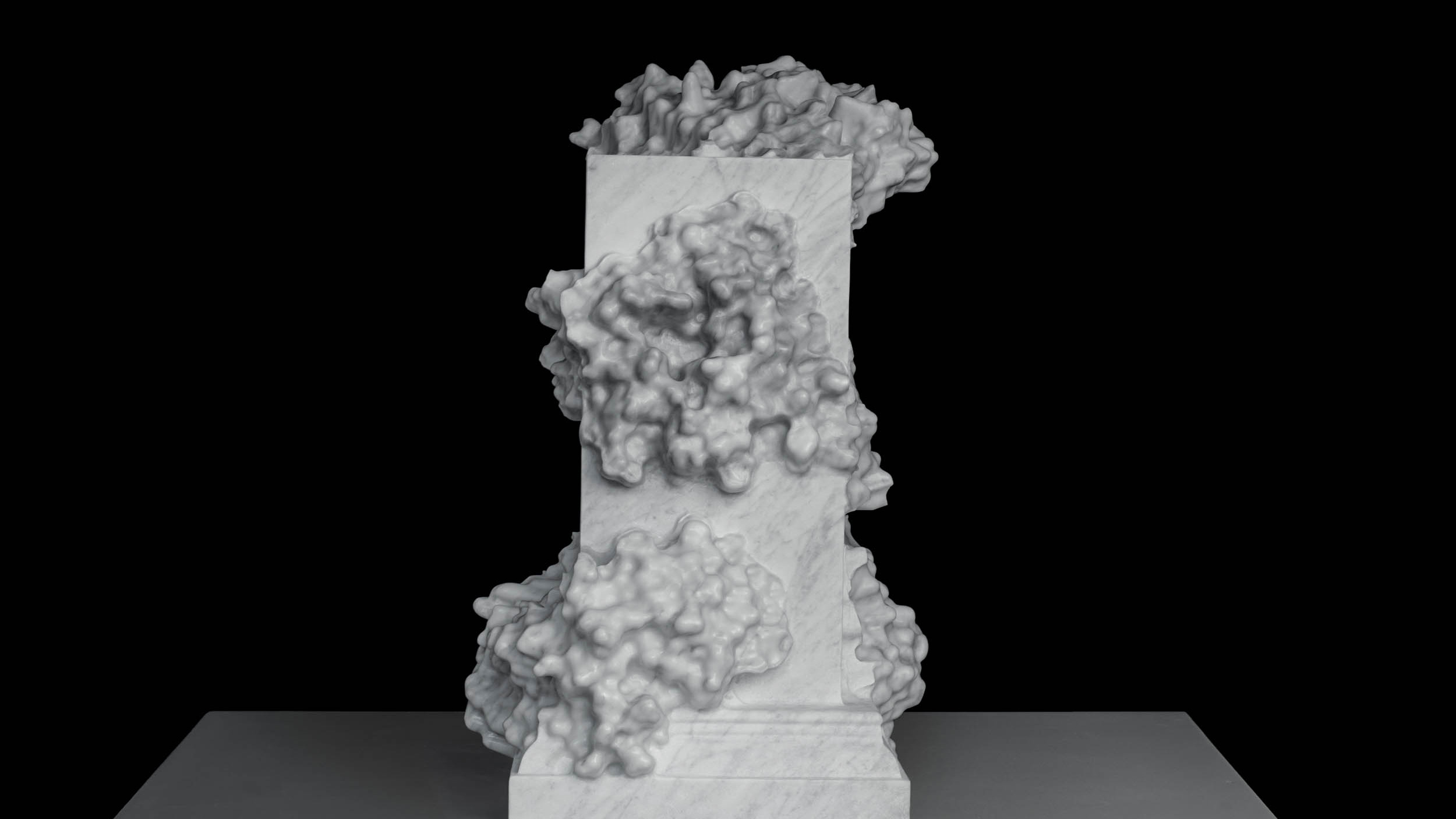
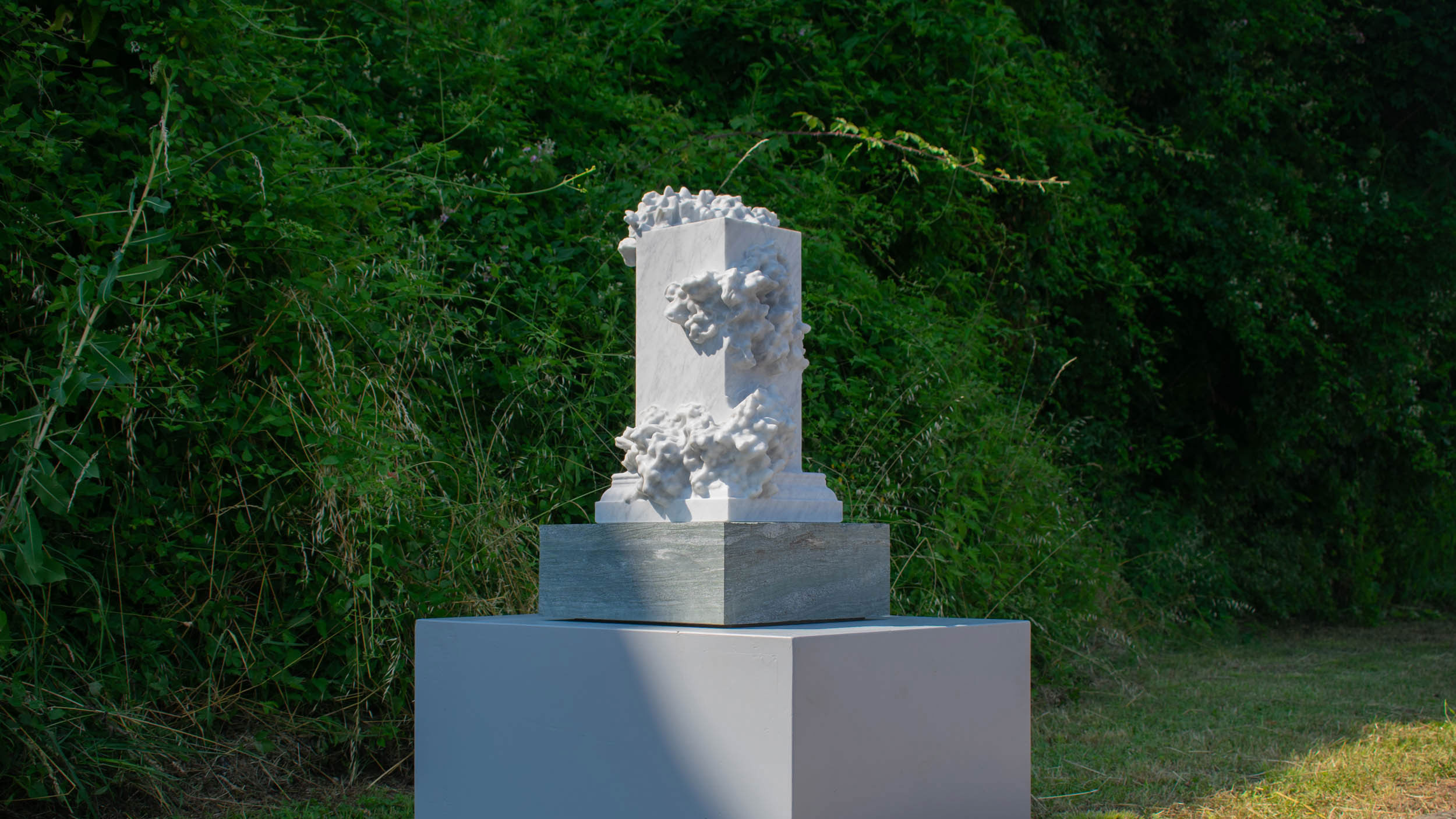
Laura Splan's new marble work, “The Foragers”, explores the invisible collisions of bodies through a distortion of micro and macro scales. The white marble sculpture combines an architectural pillar shape with molecular fungal forms. Protein models sourced from scientific databases disrupt the flat geometric surfaces of the base and column with undulating biomorphic masses. Proteins that encode how a fungus grips, pits, or discolors the structured matter of marble are situated with others that dissolve the conditions that make fungal extraction or staining possible. These combinations present a play on the conventions of allegorical stories of classical hand-carved marble sculptures with a biotechnological twist where scientific 3D models rendered in robotically milled marble depict a molecular “microdrama”. The narrative implications, however, remain open to interpretations of destruction and deterioration, as well as coexistence and homeostasis, emergence and growth. The robotic carving of the marble introduced machine path artifacts and glitch patterns that imply their own biological references. The waves, peaks, and valleys along the edges of the carved molecules are evocative of transition patterns found at many scales of growth in fungi. Together the elements of the sculpture create a fluctuating experience across multiple scales of reference.
Creating the work in the Garfagnana valley at the foot of the Apuan Alps further animates themes of interconnectedness in an ecological system where fungal spores from a nearby forest might travel on an insect’s wing, finally landing on carved marble sculptures. This new sculpture is part of “Cryptic Lineages”, Laura Splan’s emerging body of work that considers extractive processes at the intersections of biology and technology. “The Foragers” explores extraction materially through the process of robotically carved marble sourced from a Tuscan quarry; biologically through fungi that deteriorate marble and poetically by problematizing the line between foraging and extraction, survival and sustainability. As “Artist-in-Research” at Open Fung, the development of this project also included collaborative research with the Open Fung scientists and team—Rachel Linzer (Director of Science), Rolando Perez (Director of Technology), Philip Ross (Artist/Principal), Courtney Fink (Artistic Director). Together their conversations and explorations traversed the science and politics of boundaries, foraging, discovery, and exploration across magnitudes of time and space.
"Per Forza di Levare" features new robotically carved and hand-finished sculptures by artists Caroline Anderson, Helena Lukásová, Casper Braat, Lei Maslian, Jim Conboy, Mia Mulvey, Claudia Dietz, Mary Neubauer, Travis Donovan, Rob Postle, Darlene Farris-LaBar, John Rainey, Carla Gannis, Carissa Samaniego, Lucas Goossens, Sumit Sarkar, Auriea Harvey, Gabi Schwab-Trapp, Jon Isherwood, Phillip K. Smith III, Christina Karababa, Laura Splan, Sean Khales Ballo Kizy, Ashley Zelinskie.
Laura Splan's new marble work, “The Foragers”, explores the invisible collisions of bodies through a distortion of micro and macro scales. The white marble sculpture combines an architectural pillar shape with molecular fungal forms. Protein models sourced from scientific databases disrupt the flat geometric surfaces of the base and column with undulating biomorphic masses. Proteins that encode how a fungus grips, pits, or discolors the structured matter of marble are situated with others that dissolve the conditions that make fungal extraction or staining possible. These combinations present a play on the conventions of allegorical stories of classical hand-carved marble sculptures with a biotechnological twist where scientific 3D models rendered in robotically milled marble depict a molecular “microdrama”. The narrative implications, however, remain open to interpretations of destruction and deterioration, as well as coexistence and homeostasis, emergence and growth. The robotic carving of the marble introduced machine path artifacts and glitch patterns that imply their own biological references. The waves, peaks, and valleys along the edges of the carved molecules are evocative of transition patterns found at many scales of growth in fungi. Together the elements of the sculpture create a fluctuating experience across multiple scales of reference.
Creating the work in the Garfagnana valley at the foot of the Apuan Alps further animates themes of interconnectedness in an ecological system where fungal spores from a nearby forest might travel on an insect’s wing, finally landing on carved marble sculptures. This new sculpture is part of “Cryptic Lineages”, Laura Splan’s emerging body of work that considers extractive processes at the intersections of biology and technology. “The Foragers” explores extraction materially through the process of robotically carved marble sourced from a Tuscan quarry; biologically through fungi that deteriorate marble and poetically by problematizing the line between foraging and extraction, survival and sustainability. As “Artist-in-Research” at Open Fung, the development of this project also included collaborative research with the Open Fung scientists and team—Rachel Linzer (Director of Science), Rolando Perez (Director of Technology), Philip Ross (Artist/Principal), Courtney Fink (Artistic Director). Together their conversations and explorations traversed the science and politics of boundaries, foraging, discovery, and exploration across magnitudes of time and space.



ROBOTIC MILLING TECHNOLOGISTS: Garfagnana Innovazione: Gabriel Ferri and Lorenzo Busti
MARBLE CARVING ADVISORS: Digital Stone Project: Claudia Dietz and Igor Baisi